How earthquakes can affect the bulk power system and how investment decisions can improve grid resilience
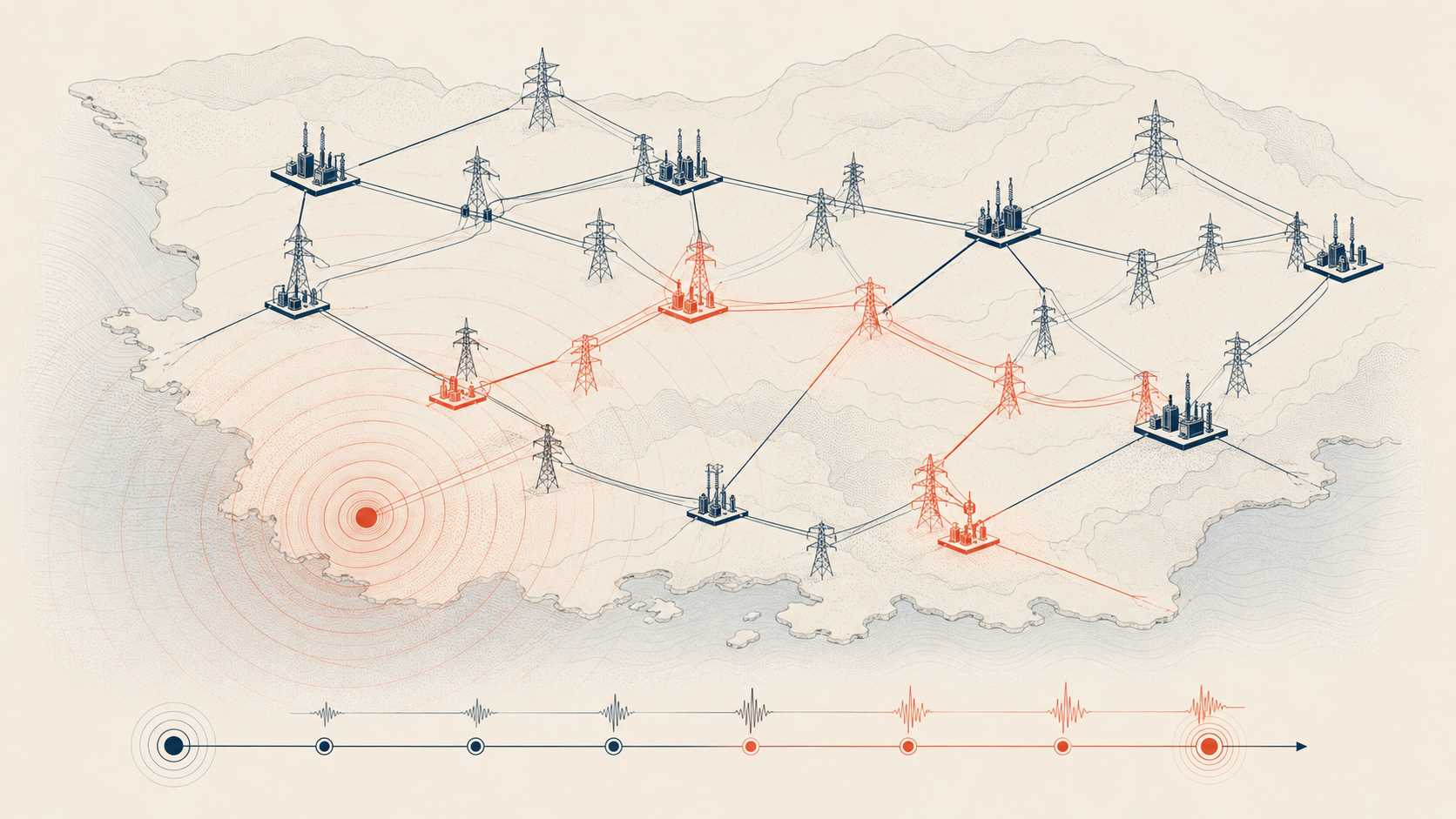
Earthquakes can damage several parts of the electric grid at the same time, making outages harder to predict, manage, and recover from. This effort helps identify which grid assets are most vulnerable, how earthquake-related failures can affect the broader power system, and where targeted investments can improve resilience. The goal is to support better planning decisions before a major event occurs, so communities can have a stronger and more reliable electric grid when it matters most.
This research effort studies how earthquakes can affect bulk electric power systems and how those impacts can be represented in grid resilience analysis. The work connects earthquake ground-motion information with power system models to evaluate how seismic events may lead to infrastructure outages and broader system consequences.
A major focus of the research is developing earthquake-induced outage scenarios that can be used in power system studies. Rather than treating earthquake damage as a single static event, the work considers how outages may occur across time as ground motion affects different grid assets.
The research combines seismic hazard data, component fragility models, and power system simulation workflows. Ground-motion information is used to estimate potential impacts at grid asset locations, while fragility models help translate those impacts into possible component outages.
The resulting outage scenarios are then evaluated through grid analysis to understand their effect on system operation, reliability, and resilience. These results can help identify vulnerable assets, critical corridors, and areas where targeted investments may improve grid performance during and after a major earthquake.
The broader goal is to support practical decision-making for seismic grid resilience. This includes helping planners understand earthquake-related grid risk, evaluate system-level consequences, and prioritize investments that can make the electric grid stronger before a major seismic event occurs.